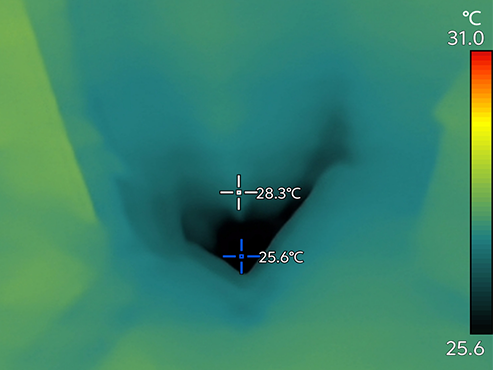
How to Use Thermal Imaging for Automotive Troubleshooting


Finding the cause of a vehicle problem can take time, especially when the faulty component is hidden or difficult to reach. For example, an engine might overheat, a braking system might generate excessive heat, an air conditioning system might deliver inconsistent cooling, or a battery might exhibit abnormal internal temperature differences. These problems can affect vehicle performance, reliability, and safety.
Thermal imaging offers a practical solution for troubleshooting these types of problems. Thermal cameras detect infrared radiation emitted from object surfaces and convert it into thermal images that visualize temperature distribution. Automotive technicians can use this information to identify irregular thermal patterns, narrow down potential problem areas, and decide which components need further testing.
From engine diagnostics to braking system checks, automotive thermal imaging can support faster troubleshooting without requiring direct contact with the inspected surface.
Detecting Engine Overheating and Cooling System Problems
Engine overheating can result from various causes, such as insufficient coolant, restricted coolant flow, a faulty thermostat, or issues with radiator performance. Identifying the root cause is critical, as continued overheating can damage engine components.
Thermal imaging cameras can visualize temperature distribution across radiators, coolant hoses, engine surfaces, and other accessible components. For example, abnormal temperature patterns across a radiator may indicate restricted coolant flow or poor heat dissipation. Temperature differences between the inlet and outlet hoses may also provide useful clues about coolant circulation and cooling system performance.
Technicians can compare thermal images against the engine’s operating conditions and other diagnostic data. However, temperature differences alone are not enough to definitively pinpoint whether the issue is a faulty thermostat, a clogged radiator, or a coolant leak; further inspection is required to determine the actual cause.
When an engine shows signs of overheating but the specific cause is unknown, thermal imaging serves as an effective preliminary screening tool.
Checking Brake System Temperature
A vehicle's braking system converts motion into heat. While it is normal for brake components to heat up during operation, an abnormal temperature variance between wheels may indicate an underlying issue.
Using thermal imaging, technicians can compare the surface temperatures of brake discs, calipers, and surrounding components after a controlled road test or braking test. A wheel showing significantly higher temperatures than the others may indicate brake drag, a sticking brake caliper, or another issue requiring further inspection.
Conversely, if a wheel shows an unusually low temperature despite similar braking conditions across all wheels, this also warrants attention. It is important to note, however, that factors such as driving conditions, the intensity of braking, road surface conditions, and the time elapsed since the last brake application can all influence the results.
While thermal imaging is a useful tool for identifying irregular temperature distribution, it is not a substitute for a physical inspection of the braking system. Because brake components can become extremely hot, technicians must follow proper workshop safety procedures before examining them closely.
Troubleshooting Automotive Air Conditioning
An automotive air conditioning system relies on several components working together, including the compressor, condenser, evaporator, and refrigerant lines. When cooling performance drops, it is often difficult to pinpoint the cause of the fault through visual inspection alone.
Handheld thermal cameras allow technicians to examine the temperature distribution across visible AC components. For example, scanning the condenser may reveal abnormal temperature patterns, while inspecting accessible refrigerant lines can help identify temperature differences that provide clues for further diagnosis.
Technicians can also compare the temperatures of air discharged from different vents to identify inconsistent cooling performance inside the cabin. If the air from one vent is noticeably warmer than that from others, it may indicate issues such as abnormal airflow distribution, a faulty blend door, or other underlying problems that require further investigation.
Thermal imaging cannot directly measure refrigerant pressure or confirm the refrigerant charge level. Technicians should combine thermal observations with pressure measurements, airflow checks, and other appropriate diagnostic procedures.
Identifying Battery Temperature Abnormalities
Vehicle batteries, especially those in electric and hybrid vehicles, require careful monitoring. Battery temperature affects performance, charging efficiency, and service life. Unusual heating may also indicate a problem that needs prompt attention.
Thermal imaging can help inspect accessible battery surfaces and identify localized hot spots or uneven temperature distribution. In conventional vehicles, technicians can use this technology to check for abnormal heating at battery terminals and connection points. In electric and hybrid vehicles, thermal imaging can be used to screen accessible battery pack surfaces and related components for abnormal temperature patterns.
However, an external thermal image cannot reveal every internal battery fault. When assessing the condition of a battery, the battery management system, diagnostic software, and manufacturer-approved testing procedures remain essential.
High-voltage vehicle batteries can pose significant electrical and thermal risks. Inspection and repair must follow manufacturer procedures and be performed by appropriately trained personnel.
Inspecting Wheel Bearings and Other Moving Components
Wheel bearings and other rotating components can develop faults due to wear, inadequate lubrication, contamination, or mechanical damage. As friction increases, the affected component may generate more heat than expected.
Technicians can use thermal imaging to compare temperature patterns around wheel hubs, bearing housings, and other accessible moving parts. If a specific wheel hub consistently shows a higher temperature than others under similar operating conditions, further inspection may be warranted.
The same approach can also be used to inspect accessible pulleys, drivetrain components, and other mechanical parts for abnormal heat generated by friction.
It should be noted that an increase in temperature does not necessarily mean a bearing is damaged. Recent braking activity, road conditions, variations in load, and other mechanical factors can all influence component temperatures. Therefore, when analyzing thermal imaging results, technicians should also incorporate noise monitoring, vibration assessment, and any necessary mechanical inspections to reach a comprehensive conclusion.
How to Get Better Results from Automotive Thermal Imaging
Reliable automotive thermal inspection requires consistent testing conditions. Whenever possible, compare similar components under comparable operating conditions; be sure to document the vehicle’s operating state, the duration of operation, and whether the system was under load.
When scanning components, choose an appropriate angle and distance. Reflections from metal surfaces can cause thermal cameras to detect infrared radiation reflected from surrounding objects, resulting in inaccurate apparent temperature readings. Furthermore, ambient temperature, airflow, surface materials, and the vehicle’s recent operating history can all influence thermal imaging results.
The main function of thermal imaging cameras is to identify abnormal patterns and guide subsequent troubleshooting, rather than directly determining the fault based on a single thermal image. Confirm suspicious findings with vehicle diagnostic tools, manufacturer specifications, and professional inspection.
Safety is also paramount. Never touch hot engine components, brake system parts, or moving mechanical assemblies. Follow workshop procedures and never approach moving belts, fans, or other rotating parts while the engine is running.
Conclusion
Thermal imaging technology provides automotive technicians with a rapid, non-contact method for identifying abnormal temperature patterns in engines, braking systems, air conditioning systems, batteries, wheel bearings, and other vehicle components.
By helping technicians identify abnormal thermal patterns, thermal cameras can narrow down potential problem areas and improve the efficiency of subsequent diagnostic procedures. When combined with diagnostic equipment, mechanical checks, and proper safety procedures, automotive thermal imaging can support more effective troubleshooting and preventive maintenance.
.jpg)