






Across Miles, Protecting the Energy Artery
Infrared Thermal Imaging Solution for the Power Transmission Industry
Overview
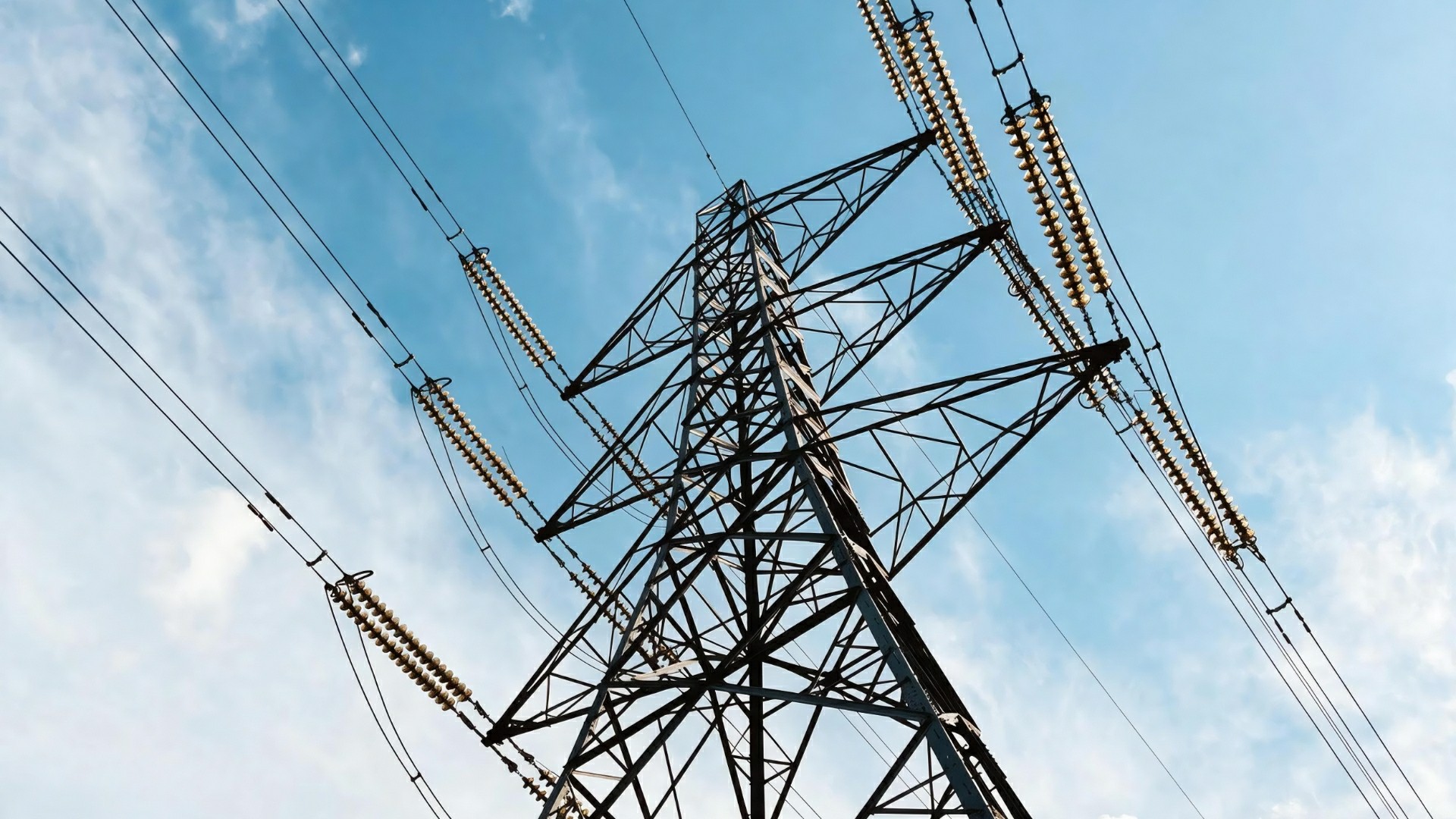
Transmission serves as the critical link between power generation and consumption. Transmission lines extend for thousands of kilometers, where towers, conductors, insulators, and fittings are continuously exposed to harsh outdoor environments, enduring wind, rain, ice, lightning strikes, and load fluctuations. With the rapid development of UHV (ultra-high voltage) systems and the continuous expansion of power grids, transmission line inspection faces increasing challenges, including wide coverage areas, complex terrain, and low efficiency of manual inspection.
Infrared thermal imaging technology offers long-range, non-contact inspection capabilities, enabling fast on-line inspections without power interruption. It allows precise localization of abnormal temperature points and effective identification of potential risks, providing strong support for the safe and stable operation of transmission lines.
Infrared thermal imaging technology offers long-range, non-contact inspection capabilities, enabling fast on-line inspections without power interruption. It allows precise localization of abnormal temperature points and effective identification of potential risks, providing strong support for the safe and stable operation of transmission lines.
Transmission Line Inspection
Background
Transmission lines are characterized by numerous distributed points, long spans, and wide coverage. Towers and conductors are exposed to outdoor environments for extended periods and are affected by factors such as lightning strikes, contamination, mechanical tension, and load fluctuations. As a result, components such as conductor joints, compression sleeves, and jumper clamps are prone to overheating defects. Traditional manual tower-climbing inspections are inefficient, involve high safety risks, and make it difficult to achieve rapid full-line coverage.
Pain Points
- Inspection coverage is extensive, and manual tower climbing is time-consuming and labor-intensive.
- Traditional inspection methods make it difficult to detect hidden defects such as poor internal compression connections and broken strands.
- In complex terrains such as mountainous areas and river crossings, inspection is highly challenging.
.jpeg)
.jpeg)
Solution
A handheld thermal camera is used for ground-based long-distance inspection. Operation and maintenance personnel can perform rapid scanning and temperature measurement of key components such as tower-conductor connection points, down leads, and jumper wires from a safe area under the tower. The thermal camera visually presents the temperature distribution in the form of thermal images, helping frontline personnel to instantly identify abnormal hot spots and complete preliminary inspection without climbing the tower.
Ground-based long-distance inspection: perform full-area scanning without climbing towers, significantly improving safety.
Wide coverage: enable rapid inspection of multiple towers, greatly improving efficiency.
Fast screening: instantly identify abnormal hot spots and guide targeted tower-climbing maintenance.
Insulator Temperature Monitoring
Background
Insulators are critical components in transmission lines that provide electrical insulation and mechanical support. Exposed to harsh conditions such as high voltage, intense ultraviolet radiation, contamination, and moisture over long periods, insulators may experience degraded insulation performance due to moisture ingress, aging, zero-value insulators, or uneven contamination distribution. This can result in localized heating or abnormal temperature rise, and in severe cases, may lead to major accidents such as pollution flashover or insulator string failure.
Pain Points
- Large numbers of insulators make individual inspection time-consuming and labor-intensive.
- Early-stage insulator defects exhibit only slight temperature differences, which cannot be identified by the naked eye.
- Traditional tower-climbing or power-off inspections are inefficient and involve high safety risks.
.jpeg)
.jpeg)
Solution
Handheld thermal camera can be used to perform long-distance inspection of insulator strings from the ground under the tower. By utilizing the characteristic that the temperature distribution of an insulator string is uniform under normal conditions, while localized temperature rise occurs under defective conditions, the camera can clearly present the temperature distribution differences of each insulator. This enables rapid localization of abnormal hot or cold spots and helps operation and maintenance personnel accurately identify the fault location.
Long-distance inspection: No tower climbing or power shutdown is required; inspections can be performed from the ground.
Intuitive comparison: Thermal images clearly display the temperature differences of each individual insulator, making zero-value insulators easy to identify.
Improved efficiency: Inspection time is significantly reduced, making it especially suitable for large-scale transmission line inspections.
Transmission Line Fitting Temperature Monitoring
Background
Transmission line fittings are key components that connect conductors, insulators, and towers, including clamps, spacers, vibration dampers, and strain clamps. Exposed to strong wind-induced vibration, high current loads, and corrosive environments over long periods, fittings are prone to loosening, wear, corrosion, or poor electrical contact, resulting in increased local resistance and abnormal temperature rise. If not addressed promptly, these issues may lead to serious accidents such as conductor breakage or line failure.
Pain Points
- Transmission line fittings are diverse in type and large in quantity, making individual manual inspection inefficient.
- Conventional inspection methods are prone to missed detections.
- High-altitude fittings are difficult to inspect at close range, resulting in high safety risks.
.jpeg)
.jpeg)
Solution
A handheld thermal camera is used to perform long-distance infrared inspection of transmission line fittings from the ground. Based on the principle that fittings remain close to ambient temperature under normal conditions but exhibit abnormal temperature rise due to increased resistance when defects are present, the thermal camera clearly displays the temperature distribution of each fitting. It enables the rapid detection of potential hazards such as overheating clamps and loose spacers with abnormal heating, while the comparison of visible and thermal images allows precise fault localization.
Non-stop inspection: No line outage is required, ensuring uninterrupted power supply.
Precise localization: Thermal images intuitively identify overheated fittings, eliminating blind troubleshooting.
Comprehensive coverage: Rapid temperature screening of all transmission line fittings can be completed in a single inspection.
.png)

.png)