






Infrared Thermal Imaging Cameras for Real-Time Temperature Monitoring Solutions
Release Time 2026-04-16
In modern industry, real-time data is crucial for maintaining efficiency, safety, and equipment reliability. Temperature is among the most critical indicators of system health; even minute fluctuations can signal potential issues. This is where infrared thermal imaging cameras play a crucial role in real-time temperature monitoring.
Unlike traditional measurement tools, thermal imaging cameras offer continuous, non-contact temperature measurement and monitoring. The operator can instantly observe thermal distribution patterns and take corrective actions before problems escalate.
What is Real-time Temperature Monitoring?
Real-time temperature monitoring refers to the continuous and simultaneous tracking of temperature fluctuations. Instead of taking occasional readings, systems are monitored 24/7.
An infrared thermal imaging camera captures thermal data and displays it instantly. This enables users to:
l Monitor temperature fluctuations in real time
l Identify anomalous heat distribution patterns
l Rapidly respond to potential malfunctions
Such monitoring is particularly critical for industries where temperature stability is essential.
How Infrared Thermal Imaging Cameras Work
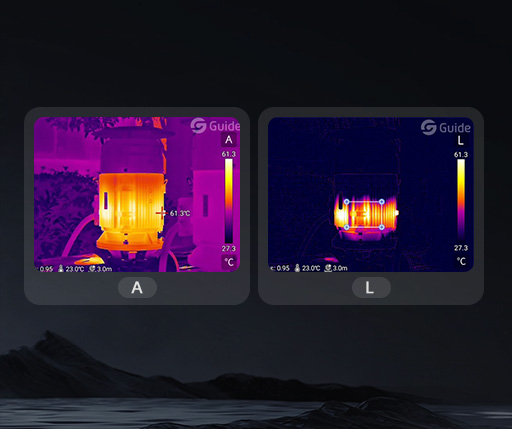
Infrared thermal cameras are capable of detecting infrared radiation emitted by objects and converting it into a visible thermal image, thereby revealing temperature differences. In real-time monitoring applications, infrared thermal cameras offer the following capabilities:
l Continuous scanning of equipment or specific areas
l Provision of real-time thermal images
l Triggering of alarms when temperatures exceed a preset threshold
For these reasons, they serve as an ideal choice for automated monitoring systems and industrial environments.
Enhancing Equipment Reliability
One of the primary benefits of utilizing infrared thermal cameras for temperature monitoring is the ability to enhance equipment reliability.
Temperature anomalies often serve as indicators of incipient faults, such as:
l Electrical overheating
l Friction in mechanical components
l Cooling system problems
By detecting these issues early, maintenance teams can take action before equipment failure occurs. This helps minimize unexpected downtime and extend the service life of mechanical equipment.
Supports Predictive Maintenance
Predictive maintenance relies on accurate and continuous data. Real-time thermal imaging monitoring systems provide valuable insights into the operational status of equipment over time.
Through continuous monitoring, enterprises can:
l Track temperature trends
l Identify gradual changes
l Schedule maintenance at the appropriate time
This approach both reduces unnecessary maintenance and prevents severe failures.
Enhancing Industrial Safety
High temperatures can pose serious safety hazards. Equipment overheating may lead to fires, system failures, or hazardous conditions.
By utilizing infrared thermal cameras for industrial safety monitoring, operators can:
l Detect overheating components early
l Continuously monitor high-risk areas
l Receive alerts when temperatures exceed safety thresholds
This helps enhance workplace safety and reduce the risk of accidents.
Applications Across Various Industries
Infrared thermal imaging cameras are widely utilized for real-time monitoring across numerous industries, including:
l Manufacturing - Monitoring production lines and machinery
l Energy & Power - Inspecting transformers and electrical systems
l Oil and Gas - Detecting abnormal heat spots in pipelines and equipment
l Building Management - Tracking the operational status and energy efficiency of HVAC systems
Due to their high degree of flexibility, these devices are equally well-suited for monitoring large-scale systems and handling small-scale monitoring tasks.
Non-Contact and Continuous Monitoring
A significant advantage of thermal imaging cameras is that they require no physical contact. This enables the safe monitoring of:
l High-voltage equipment
l Moving machinery
l High-temperature environments
Uninterrupted, continuous monitoring ensures that no critical temperature changes go undetected.
Easy Integration into Monitoring Systems
Modern thermal imaging monitoring solutions can be integrated with existing systems. They typically support:
l Real-time data transmission
l Automated early warnings and alarms
l Remote monitoring through software
This enables operators to more easily manage multiple systems and respond rapidly to various issues.
Conclusion
Infrared thermal imaging cameras provide an effective solution for real-time temperature monitoring. By offering continuous, accurate, and non-contact measurements, they assist various industries in detecting issues early and maintaining stable operations.
With advantages such as enhanced equipment reliability, improved security, and support for predictive maintenance, infrared thermal cameras are increasingly becoming an indispensable tool in industrial monitoring systems. As industries across various sectors continue to deepen their reliance on real-time data, these cameras will play an increasingly vital role in ensuring both efficiency and safety.


.svg)
.svg)