








How to Use a Thermal Camera for Home Inspection
Release Time 2026-06-18
Thermal imaging cameras are becoming essential tools for home inspections. Unlike traditional inspection methods that rely solely on visual observation, thermal imaging technology allows users to intuitively visualize temperature differences across walls, ceilings, floors, and building components.
Whether you are a homeowner, home inspector, contractor, or property manager, using a thermal imaging camera for home inspections allows you to detect hidden issues without damaging the building structure.
This article explains how to use thermal imaging cameras for home inspections and the various problems they can help uncover.
Begin with the Right Environmental Conditions
For optimal detection results, there should be a significant temperature difference between the inside and outside of the house.
A temperature difference of 10°C (18°F) or greater makes it easier to identify thermal patterns.
In addition, the following measures are recommended:
l Close all doors and windows before inspection
l If necessary, turn on the heating or air conditioning system
l Avoid direct sunlight on the surfaces to be inspected
l Perform inspections in the early morning or evening when temperatures are more stable
Proper conditions help produce clearer thermal images.
Scanning Exterior Walls and the Building Envelope
Begin by checking the building's exterior walls.
A thermal imaging camera can reveal areas of missing insulation or heat loss in buildings.
Look out for the following:
l Inconsistent temperature distribution
l Cold spots in winter
l Hot spots in summer
l Gaps around doors and windows
l Thermal bridges
Identifying these issues helps improve energy efficiency and reduce heating or cooling costs.
Inspecting Ceiling and Roof Areas
Ceilings often conceal issues that are not visible from below.
Using thermal cameras, inspectors can identify areas of abnormal temperature caused by:
l Roof leaks
l Damp insulation
l Air infiltration
l Poor attic insulation
l Moisture accumulation
Early detection allows for repairs to be made before structural damage worsens.
Checking for Water Leaks and Moisture Issues
One of the most common uses of thermal cameras in home inspections is detecting hidden areas of moisture.
Water changes the surface temperature of building materials, creating thermal patterns that can be observed through infrared imaging.
Inspect the following areas:
l Bathrooms
l Kitchens
l Pipe areas
l Water heaters
l Basements
While thermal imaging cameras cannot detect water directly, they help locate areas that may require further moisture testing.
Safety Inspection of Electrical Systems
Electrical components produce heat during operation.
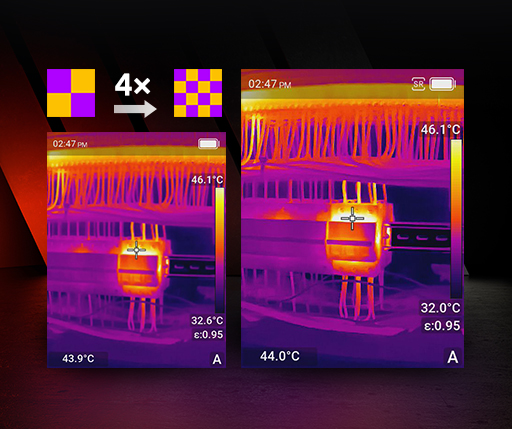
By using a thermal imaging camera for electrical inspections, users can detect abnormal heating without coming into contact with live equipment.
Common inspection targets include:
l Circuit breakers
l Distribution panels
l Switches
l Power outlets
l Distribution boxes
Overheating may indicate loose connections, circuit overload, or component aging, all of which require maintenance.
Inspect HVAC System
Heating and cooling systems are vital for home comfort and energy efficiency.
Thermal imaging helps assess the following:
l Airflow distribution
l Heating performance
l Cooling uniformity
l Ductwork leakage
l Blocked vents
More uniform temperature distribution generally indicates higher HVAC system efficiency.
Check for Air Leaks Around Doors and Windows
Air leakage is a major cause of energy loss in residential buildings.
A portable thermal imaging camera makes it easy to inspect window frames, door seals, and wall joints.
Cold or warm air entering through small gaps creates a visible temperature difference on the thermal image.
Sealing these leaks helps improve indoor comfort and reduce energy consumption.
Recording and Comparing Inspection Results
Modern thermal cameras typically allow users to save images and generate reports.
Keeping inspection records helps homeowners:
l Compare conditions over time
l Monitor repaired areas
l Plan maintenance projects
l Share inspection reports with contractors
Regular thermal imaging inspections provide valuable information for long-term home maintenance.
Conclusion
Using thermal imaging cameras for home inspections is a rapid, non-destructive, and effective method for identifying hidden building issues. Whether dealing with insulation defects, moisture problems, electrical anomalies, or the performance of HVAC systems, thermal imaging technology gives critical information that is invisible to the naked eye.
With the right inspection techniques and proper environmental conditions, a thermal camera used for home inspection can help homeowners improve safety, increase energy efficiency, and protect the long-term value of their property.


.svg)
.svg)