








How High Resolution Thermal Imaging Cameras Improve Predictive Maintenance
Release Time 2026-03-09
In modern industrial environments, equipment reliability is inextricably linked to production efficiency. Unexpected downtime of machinery can disrupt production plans, increase maintenance costs, and potentially create safety hazards. For this reason, many companies are moving away from reactive maintenance and adopting predictive maintenance strategies.
High resolution thermal imaging cameras play an important role in the field of predictive maintenance. By capturing detailed thermal patterns, these cameras can help maintenance teams identify early signs of problems before equipment fails.
What is Predictive Maintenance?
Predictive maintenance focuses on monitoring equipment condition and predicting when maintenance will be needed. Instead of waiting for the machine to break down or replacing parts according to a fixed schedule, technicians analyze data and perform maintenance only when necessary.
This approach can help businesses:
lReduce unexpected equipment failures
lMake maintenance more efficient
lExtend equipment life
lReduce maintenance costs
Thermal imaging cameras have become one of the most useful tools in this process, as temperature changes are often the first sign of a problem.
Why High Resolution Matters in Thermal Imaging Cameras
High-resolution thermal imaging cameras capture more temperature data than low-resolution models. This means they can display clearer thermal images and resolve smaller temperature differences.
Higher resolution offers several advantages:
lClearer thermal images
lMore accurate detection of tiny hot spots
lHigher temperature accuracy
lEasier identification of abnormal thermal patterns
These details are important in complex industrial environments. Tiny temperature changes that low-resolution cameras might miss can be clearly detected by high-resolution imaging technology.
Early Detection of Electrical Problems
Electrical systems are one of the most common causes of equipment failure. Loose connections, circuit overload, and aging components often generate excessive heat before a failure occurs.
High-resolution thermal cameras can display temperature changes occurring in distribution panels, switchgear, and power distribution systems, helping maintenance teams quickly identify problems.
For instance, slightly overheated connecting points in a control panel might be invisible to the naked eye. High-resolution thermal images can precisely locate hot spots. Once a problem is detected, technicians can tighten connections or replace faulty parts before they fail.
This early detection avoids costly downtime and enhances overall system reliability.
Monitoring Mechanical Equipment with High-Resolution Thermal Cameras
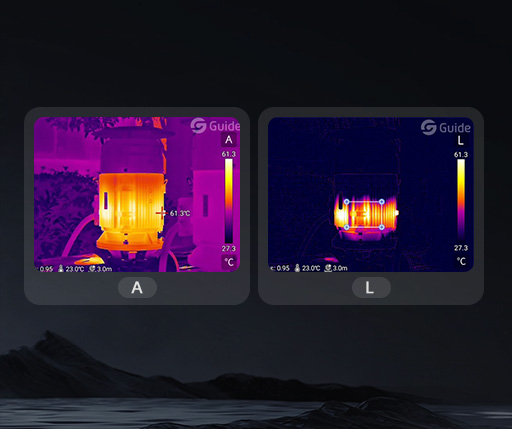
Mechanical components also benefit from thermal monitoring. Bearings, electric motors, pumps, and gearboxes naturally generate heat during operation. However, abnormal temperature increases may indicate problems such as friction, misalignment, or lubrication failure.
A high resolution thermal imaging camera allow maintenance teams to compare temperature distribution across different parts of the machine. If the temperature of one bearing is considerably higher than that of other bearings, it may indicate that it has experienced premature wear.
Technicians do not need to wait for noise, vibration, or mechanical damage to occur before performing maintenance; instead, they can schedule maintenance at the appropriate time. This helps avoid unexpected downtime and increases the lifespan of critical equipment.
Supports Scheduled Equipment Inspections
Predictive maintenance requires continuous monitoring. High resolution thermal cameras make routine inspections faster, more efficient, and provide a greater amount of information.
The cameras allow inspectors to quickly scan large areas of equipment and capture thermal images for analysis. These images can be stored and compared over long periods.
By analyzing temperature trends, maintenance teams can identify subtle changes that are difficult to detect. For example, if a motor's temperature gradually increases over multiple inspection cycles, it may indicate increased load or a problem with the cooling system.
Tracking these trends helps maintenance teams develop repair plans before problems escalate.
Improving Maintenance Planning
A major challenge in industrial maintenance is determining which equipment requires priority. Due to limited time and resources, teams must prioritize the highest-risk repairs.
High-resolution thermal imaging technology is able to clearly visualize equipment condition. Hot spots and areas of abnormal temperature are clearly visible in thermal images.
This information enables maintenance managers to:
lPrioritize maintenance of high-risk equipment
lSchedule repairs more efficiently
lCut down unnecessary maintenance work
lImprove decision-making
Thermal data supports more accurate planning, rather than relying solely on experience or guesswork.
Enhancing Inspection Safety
Safety is another significant advantage of thermal imaging technology. Inspecting electrical systems and high-temperature equipment using traditional methods can be dangerous.
High-resolution thermal imaging cameras enable technicians to conduct non-contact inspections from a safe distance. Equipment can be monitored while in operation without touching the hot surface or opening the live panels unnecessarily.
This reduces the risk of accidents and helps technicians perform inspections more safely.
Reducing Downtime and Maintenance Costs
Unplanned downtime is costly for any business. Production downtime, emergency repairs, and equipment replacements quickly increase operating costs.
A high-resolution thermal imaging camera can detect problems early, helping businesses avoid these situations. Maintenance personnel can address issues during planned maintenance periods, rather than reactively dealing with unexpected failures.
Over time, this approach reduces overall maintenance costs and improves operational stability.
Conclusion
High-resolution thermal imaging cameras are invaluable tools for modern predictive maintenance planning. They can capture detailed patterns of temperature changes, enabling maintenance teams to detect early signs of electrical and mechanical faults.
By identifying hotspots, monitoring equipment status, and supporting safer inspections, these thermal imagers help prevent unexpected malfunctions and improve maintenance plans. Guide Sensmart is a professional manufacturer of high-resolution thermal imaging cameras with many years of global experience. We look forward to your inquiries.


.svg)
.svg)