








Key Benefits of Thermographic Cube Cameras in Smart Manufacturing
Release Time 2026-03-20
Smart manufacturing is transforming how factories operate. With the help of various technologies such as automation and data analytics, modern production lines can operate more efficiently and reduce unexpected failures. One technology that is becoming increasingly useful in this environment is the thermographic cube camera.
A thermographic cube camera is a compact thermal camera that can be used for continuous monitoring and easy integration into industrial systems. By capturing accurate thermal data in real time, it can help factories detect problems early and maintain stable production operations.
Below are some of the key benefits of using a thermographic cube camera in smart manufacturing.
Compact Design, Easy Integration
One of the biggest advantages of thermographic cube cameras is their compact size. Unlike traditional handheld thermal cameras, cube-style thermal cameras can be directly mounted on machines, production lines, or monitoring systems.
Because of their small size and light weight, these cameras can be installed in confined spaces where large equipment cannot be fitted. This makes them ideal for space-constrained automated manufacturing environments.
In smart factories, these cameras can be integrated into:
lAutomated inspection systems
lProduction line monitoring systems
lRobotic systems
lIndustrial control systems
This flexibility enables manufacturers to build more advanced and automated monitoring systems.
Real-time Temperature Monitoring
Temperature is one of the most important indicators of machine health. Many equipment failures begin with abnormal heat buildup.
A thermographic cube camera continuously monitors temperature changes and provides real-time thermal images. This allows engineers and maintenance teams to accurately understand how heat is distributed across the equipment.
Real-time monitoring helps detect the following issues:
lMotor overheating
lElectrical hotspots
lMechanical component friction
lCooling system failures
Early detection of abnormal temperatures allows the maintenance team to respond quickly and prevent problems from escalating.
Improving Predictive Maintenance
Predictive maintenance is an essential concept in smart manufacturing. Factories no longer wait for machines to break down before performing maintenance; instead, they monitor equipment status and perform maintenance when necessary.
Industrial thermographic cube cameras play a critical role in this area. By collecting thermal data over long periods, they help identify patterns that indicate wear or potential failures.
For instance, if a bearing's temperature rises slowly over several weeks, it may indicate a lubrication problem or premature damage. The maintenance team can replace parts during planned downtime, rather than waiting for an unexpected failure.
This approach reduces unexpected equipment failures and helps the plant maintain stable production.
Supports Automated Quality Inspection
Temperature data is also very useful in product quality control. In many manufacturing processes, temperature stability directly affects product consistency and process reliability.
Industrial thermographic cube cameras can monitor temperature during production to ensure that processes remain within required ranges. This is particularly important in the following industries:
lElectronics Manufacturing
lPlastics Processing
lMetal Processing
lFood Processing
By detecting temperature deviations early, manufacturers can correct problems before defective products are produced.
This helps improve product quality and reduce waste.
Enhancing Safety in Industrial Facilities
Overheating equipment poses serious safety hazards to factories. Electrical faults, mechanical friction, and poor ventilation can all lead to dangerously high temperatures.
Thermographic cube cameras are effective for monitoring these risks. If a component overheats, the system can issue an alarm or automatically shut down the equipment.
This type of monitoring helps prevent:
lEquipment damage
lElectrical fires
lProduction accidents
In smart manufacturing environments, thermal monitoring becomes an important component of overall safety management.
Enabling Data-Driven Decision Making
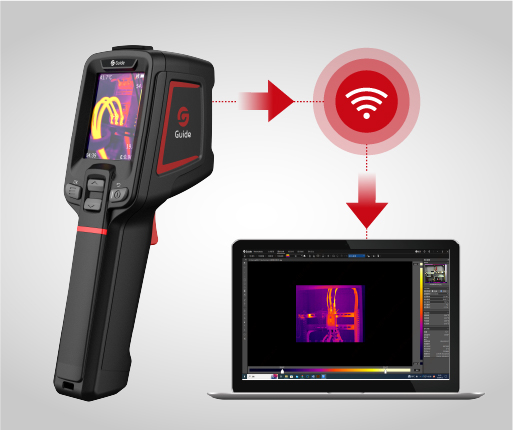
Smart manufacturing relies heavily on data to improve efficiency. Thermographic cube cameras can generate valuable thermal data that can be integrated with other industrial monitoring systems.
When combined with industrial software platforms, this data can help manufacturers:
lAnalyze machine performance
lDiscover ways to improve efficiency
lReduce energy consumption
By combining thermal information with other operational data, companies can make more informed decisions about equipment management and production planning.
Conclusion
Thermographic cube cameras are gradually becoming an essential tool in today’s smart manufacturing environments. Their compact design, real-time temperature monitoring, and ability to support predictive maintenance make them ideal for automated industrial systems.
By identifying heat-related issues early, these cameras can help factories improve equipment reliability, maintain product quality, and enhance workplace safety. As a trusted manufacturer of thermographic cube cameras, Guide Sensmart is committed to delivering reliable thermal imaging solutions for smart manufacturing and looks forward to collaborating with industry partners worldwide.


.svg)
.svg)