








How Industrial Thermal Imaging Cameras Improve Production Line Efficiency
Release Time 2026-05-12
In modern manufacturing, production efficiency is inextricably linked to equipment performance and process stability. Even minor malfunctions on the production line can lead to slower operations, reduced product quality, and unexpected downtime.
To enhance efficiency and mitigate operational risks, many factories are adoptingindustrial thermal imaging cameras. These cameras help operators monitor temperature fluctuations in real time and detect anomalies early, ensuring smoother operation of production systems.
With the continued advancement of industrial automation, thermal imaging cameras are becoming an essential component of efficient production management.
Detecting Issues Before Production Downtime
Unplanned equipment failure is one of the primary causes of production delays. Many mechanical and electrical faults often originate from abnormal heat buildup.
Industrial thermal imaging cameras are able to detect problems such as:
l Electrical hotspots
l Abnormal bearing temperatures
l Cooling system failures
By detecting these issues early, maintenance teams can perform repairs before equipment failures cause production disruptions.
This helps minimize downtime and enhance overall production efficiency.
Improving Equipment Performance
Stable equipment performance is essential for maintaining production speed and product quality.
By utilizing thermal imaging cameras for industrial monitoring, operators can observe temperature conditions during machine operation and identify areas of inefficient performance.
For instance, thermal imaging technology can reveal:
l Uneven heating in machinery
l Excessive friction in moving parts
l Poor ventilation around the equipment
Correcting these issues helps improve machine efficiency and reduce energy waste.
Supporting Continuous Production Operations
Many factories operate around the clock. In such environments, equipment monitoring becomes critical.
High-performance industrial thermal imaging cameras make it possible for technicians to monitor systems without interrupting production.
This offers several advantages:
l Continuous monitoring during operation
l Faster response to anomalies
l Reduced need for maintenance-related downtime
Consequently, production lines can maintain higher operational efficiency.
Enhancing Product Quality Control
In industries such as electronics, food processing, plastics, and manufacturing, temperature stability directly impacts product quality.
A thermal imaging camera in production lines helps monitor thermal conditions during manufacturing processes.
They can identify:
l Uneven heating
l Temperature fluctuations
l Inconsistent cooling
Maintaining temperature stability helps enhance product consistency and reduce defects.
Rapid Troubleshooting on the Production Floor
When issues arise on the production line, rapid troubleshooting becomes essential.
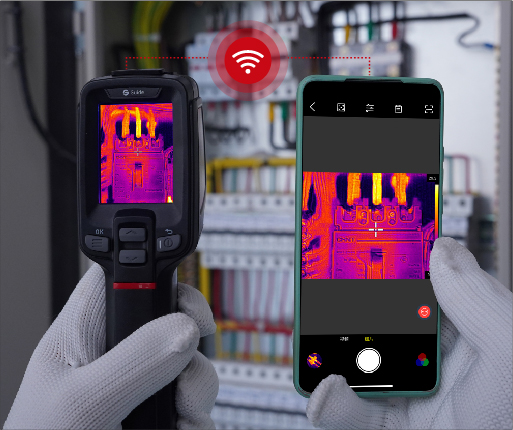
Portable industrial thermal imaging cameras enable maintenance personnel to quickly pinpoint abnormal heat sources, eliminating the need for time-consuming contact inspections.
Technicians can inspect the following equipment:
l Electrical control cabinets
l Motors and conveyors
l Mechanical systems
l Industrial pipes
Faster diagnostics translate to shorter repair times and reduced production losses.
Reducing Maintenance Costs
Traditional maintenance methods often require frequent manual inspections or unnecessary component replacements.
With thermal imaging cameras used for predictive maintenance, companies can monitor equipment condition more accurately and perform maintenance only when needed.
This helps to:
l Reduce maintenance expenses
l Avoid unnecessary repairs
l Optimize maintenance planning
Efficient maintenance operations directly contribute to enhanced production performance.
Enhancing Workplace Safety
Production line safety is essential to ensure efficiency. Overheating in electrical systems or machinery can pose serious risks.
By utilizing industrial thermal cameras for safety inspections, facilities can timely identify dangerous temperature spikes before accidents occur.
This helps prevent:
l Equipment damage
l Fire hazards
l Unplanned downtime
Safer operations lead to a more stable production environment.
Empowering Smart Manufacturing
Many modern factories are transitioning toward smart manufacturing and automated monitoring systems.
Industrial Thermal imaging cameras support this transformation by providing:
l Real-time thermal data
l Automated temperature monitoring
l Digital inspection records
This helps enhance production visibility and assists managers in making operational decisions more rapidly.
Conclusion
Industrial thermal imaging cameras help manufacturers improve production line efficiency in multiple ways. From early fault detection and predictive maintenance to quality control and safety monitoring, thermal imaging cameras provide invaluable real-time insights into production operations.
As factories continue to prioritize efficiency, automation, and reliability, industrial thermal imaging cameras have become vital tools in modern production management.


.svg)
.svg)