








How Thermographic Cube Cameras Improve Thermal Data Accuracy in Industrial Applications
Release Time 2026-03-21
In many industries, accurate temperature data is crucial. Whether monitoring electrical systems, inspecting mechanical equipment, or controlling manufacturing processes, even small temperature differences can signal potential problems. If temperature data is inaccurate, maintenance decisions and process adjustments may become unreliable.
This is where the thermographic cube camera proves its value. Designed specifically for continuous monitoring and seamless system integration, this compact thermal imaging device helps optimize how temperature data is collected, analyzed, and used in real-world applications.
Why Thermal Data Accuracy Is So Important
In industrial environments, temperature often serves as the primary indicator of impending issues. A subtle rise in temperature may signal:
lIncreased electrical resistance at connection points
lFriction from mechanical parts
lSystem overload conditions
lInefficient cooling systems
If temperature readings are inaccurate, these early warning signs may be missed. This could lead to equipment failure, production downtime, or even pose safety risks.
Accurate thermal data enables engineers to make more informed decisions, plan maintenance tasks more effectively, and prevent unexpected issues.
Stable Mounting Reduces Measurement Errors
A key advantage of thermographic cube cameras is that they typically utilize a fixed mounting method. Unlike handheld thermal cameras, whose measurement results are affected by the user's angle and distance, thermographic cube cameras are mounted in a stable position.
This fixed setup provides consistent measurement conditions:
lAn identical viewing angle
lA constant distance from the target
lMinimal human error
It is because of this consistency that the acquired thermal data is more reliable and facilitates easier comparative analysis across different time periods.
Continuous Monitoring Enhances Data Consistency
Industrial thermographic cube cameras are designed for continuous operation. Rather than merely capturing sporadic images, they monitor temperatures in real time.
This continuous data stream helps to:
lDetect gradual temperature changes
lIdentify anomalous trends
lPrevent oversight of transient overheating events
For example, certain components that overheat only during full-load operation may be difficult to detect through manual inspections. Cube cameras, however, can automatically capture such data, thus improving overall detection accuracy.
Higher Resolution, Capturing More Detail
Many thermographic cube cameras feature high thermal resolution, enabling them to detect minute temperature differences on object surfaces.
Higher resolution provides:
lMore Detailed Thermal Imaging
lMore Precise Identification of Minute Hotspots
lHigher Measurement Accuracy
This is particularly crucial in complex systems where multiple components are densely arranged. Sharper images facilitate the precise localization of the specific source of heat.
Integration with Intelligent Systems Enhances Analytical Capabilities
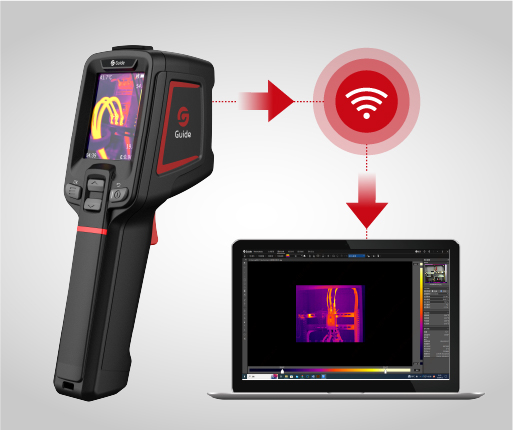
Industrial thermographic cube cameras are frequently integrated into industrial surveillance systems. They are capable of interconnecting with software platforms, sensors, and control systems.
This integration enables:
lAutomated Data Acquisition and Storage
lReal-time Alerts for Temperature Excursions
lData Analysis Over Time
lRemote Monitoring
By incorporating thermal data with data from other systems, enterprises can enhance diagnostic accuracy and make more informed decisions.
Minimizing Human Error in Data Acquisition
Manual thermal imaging inspection relies heavily on the operator's experience and operational consistency. Different technicians may vary in their image acquisition methods, leading to fluctuations in the resulting data.
Thermographic cube cameras minimize human error. Once installed, they operate automatically under consistently uniform conditions.
This helps reduce:
lMeasurement inconsistencies
lMissed inspection points
lBias resulting from human judgment
Consequently, the collected thermal data becomes more standardized and reliable.
Superior Performance in Long-Term Monitoring
Long-term monitoring is important for predictive maintenance and optimization. Thermographic cube cameras are designed for long-term operation.
They offer consistent data that can be employed to track temperature trends over periods spanning days, weeks, or months.
This helps to identify:
lGradual equipment wear
lTemperature fluctuations caused by seasonal changes or load variations
lRecurring heat dissipation issues
With this information, maintenance teams can make more accurate predictions and plan interventions more effectively.
Suitable for Harsh Industrial Environments
Industrial environments are often challenging, characterized by factors such as dust, vibration, and temperature fluctuations. Thermographic cube cameras are typically designed specifically to operate under such conditions.
Their stable performance ensures that temperature data remains accurate, even in harsh environments. This reliability is critical for industries that require continuous monitoring.
Conclusion
Thermographic cube cameras enhance the accuracy of thermal data by offering robust mounting options, continuous monitoring capabilities, and high-resolution imaging. By minimizing human error and integrating with intelligent systems, they deliver consistent and reliable temperature data.
In modern industrial applications, accurate thermal information is vital for equipment maintenance, safety assurance, and process control. Thermographic cube cameras help ensure the precision and utility of such data, thereby enabling enterprises to detect potential issues early on and achieve more efficient operations. As a trusted manufacturer of thermographic cube cameras, Guide Sensmart is committed to delivering reliable thermal imaging solutions for smart manufacturing and looks forward to collaborating with industry partners worldwide.


.svg)
.svg)