








Using a Thermal Camera for Water Leak Detection Without Breaking Walls
Release Time 2026-04-14
Water leaks are a common and costly problem in residential, commercial, and industrial buildings. However, accurately locating the source of a leak is often very difficult, especially when the leak is hidden behind a wall, under a floor, or inside a ceiling. Traditional detection methods often require drilling or breaking surfaces, which can cause additional damage and significantly increase repair costs. Thermal cameras for water leak detection offer a non-invasive and efficient solution. By detecting subtle temperature differentials caused by moisture, thermal imaging cameras allow technicians to locate leaks without damaging walls or structural elements.
Why Water Leaks Are Hard to Detect
Concealed water leaks are often difficult to spot with the naked eye. In many cases, signs of a leak often appear gradually and may include:
l Damp spots appearing on walls or ceilings
l The growth of mold or mildew
l Peeling paint or wallpaper
l Rising water bills
These signs do not always accurately pinpoint the exact location of the leak. Without professional testing equipment, technicians may have to demolish large areas of walls or ceilings to find the source of the leak, which is not only time-consuming but also causes unnecessary economic waste.
How Thermal Cameras Detect Water Leaks
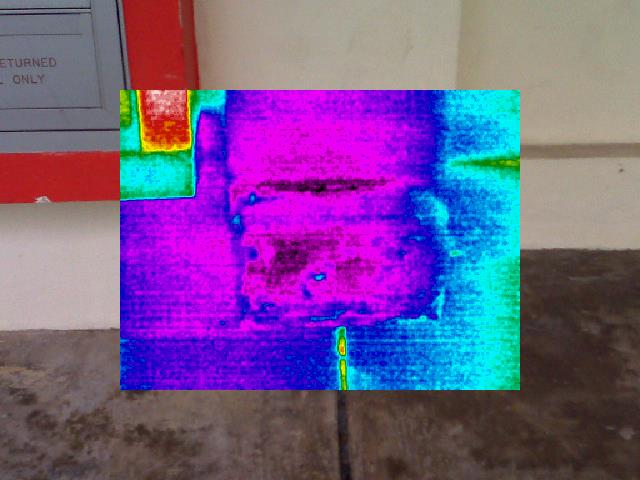
Thermal cameras used in water leak detection operate by sensing temperature differences on the surfaces of objects. When water infiltrates a building's internal structure, it changes the thermal distribution and heat transfer characteristics of surrounding materials.
For instance:
l Damp areas often appear cooler due to the evaporation of moisture;
l Water trapped within walls may create an uneven temperature distribution;
l Leaking pipes can cause localized temperature fluctuations.
Thermal imaging cameras visualize these differences as real-time thermal images, thereby revealing hidden moisture and enabling operators to clearly identify it.
Non-Invasive Leak Detection Methods
Among the many benefits of using thermal imaging cameras for water pipe leak detection is that the process is entirely non-destructive.
Technicians can:
l Scan walls, floors, and ceilings without the need for drilling
l Precisely pinpoint the most probable leak locations
l Minimize unnecessary damage
This method of detection not only reduces repair costs but also eliminates the need for additional follow-up construction work once the inspection is complete.
Faster, More Efficient Inspections
Utilizing handheld thermal cameras for leak detection can significantly accelerate the inspection process.
Rather than manually checking each area individually, technicians can rapidly scan large surface areas and identify suspicious points in real time. This proves particularly useful in the following scenarios:
l Large buildings
l Complicated piping systems
l Multiple room inspections
Faster inspections translate to more timely repairs, thereby minimizing disruptions to daily operations.
Enhancing Leak Detection Accuracy
Thermal imaging technology enhances detection accuracy by offering visual evidence of temperature differences. This enables technicians to precisely pinpoint problem areas, rather than relying solely on guesswork.
When used in conjunction with other detection methods like moisture meters, professional leak detection thermal cameras can provide highly reliable detection results.
Precise detection helps reduce the risk of overlooking concealed leaks or performing unnecessary repairs.
Applications in Residential and Industrial Settings
Thermal cameras for plumbing leak detection can be applied in a wide range of scenarios, including:
l Residential Buildings - Identifying leak points behind walls or beneath floors
l Commercial Buildings - Identifying hidden plumbing issues
l Industrial Facilities - Monitoring large-scale piping systems
l Roof Inspections - Locating points of moisture intrusion
Due to its versatility, this infrared thermal imaging camera serves as an indispensable and valuable tool for plumbers, maintenance teams, and building inspectors.
Enhancing Safety and Preventing Damage
Undetected water leaks can lead to serious consequences, such as structural damage, mold growth, and electrical safety hazards.
By utilizing thermal imaging cameras, technicians can identify leaks early on and take corrective action before the problem escalates. This helps to:
l Protect the building's structural integrity
l Eliminate health risks associated with mold
l Reduce long-term repair costs
Early detection is crucial for maintaining a safe and healthy environment.
Conclusion
Utilizing thermal cameras for leak detection is an effective and non-invasive method for locating concealed leaks. By visualizing temperature differentials, technicians can quickly identify problem areas without the need to break through walls or damage the building structure.
With advantages such as faster detection speeds, higher accuracy, and reduced repair costs, thermal cameras are rapidly becoming an indispensable tool for modern building inspection and predictive maintenance. Whether applied to residential homes or industrial facilities, they offer a smarter, more efficient solution to this common challenge.


.svg)
.svg)