








How Thermal Imaging Cameras Improve Accuracy in Electrical Troubleshooting
Release Time 2026-04-30
Electrical problems often remain hidden during routine inspections. Loose connections, circuit overloads, component failures, and hidden hot spots can all pose risks before equipment malfunctions. If left unaddressed, these issues can lead to downtime, costly repairs, and even pose safety risks.
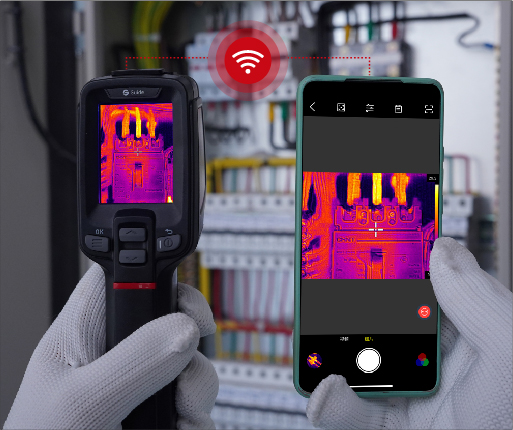
This is where an infrared thermal imaging camera for electrical troubleshooting becomes a valuable tool. By displaying temperature differentials in real time, thermal imaging technology allows technicians to locate faults more quickly and diagnose problems with greater accuracy.
Detecting Concealed Electrical Hotspots
One major advantage of thermal imaging camera for electricity inspections is the ability to detect hotspots that cannot be seen with the naked eye.
Electrical faults often generate excessive heat before they completely fail, for example:
l Loose or corroded connections
l Overloaded breakers
l Failing fuses
l Uneven loads
These temperature anomalies can be immediately detected using thermal imaging technology, allowing technicians to identify problems early on before they escalate into serious failures.
Enhancing Fault Diagnosis Accuracy
Traditional troubleshooting often relies on manual testing and visual inspection, which can lead to the oversight of concealed faults. A thermal imaging camera for electrical fault detection provides a clearer picture.
Technicians can rapidly and precisely pinpoint the source of abnormal heat, eliminating guesswork when locating faults. This not only enhances diagnostic accuracy but also reduces unnecessary repair work.
Furthermore, this heightened capability for accurate fault identification ensures that issues are thoroughly resolved on the first attempt.
Faster Troubleshooting, Shorter Downtime
Speed matters when electrical systems fail. A handheld thermal imaging camera enables technicians to scan panels, circuits, and components quickly.
Instead of spending hours manually troubleshooting point-by-point, technicians can now:
l Scan systems in minutes
l Identify problem areas instantly
l Prioritize urgent repairs
More efficient troubleshooting helps minimize downtime, ensuring smooth and continuous business operations.
Safer Electrical Inspections
Working around energized electrical equipment can be hazardous. One of the greatest advantages of thermal imaging technology in the electrical inspection industry is its non-contact inspection capability.
Technicians can inspect the following equipment, without direct contact with any components:
l Live electrical panels
l Switchgear
l Transformers
l Motor control systems
This not only enhances operational safety while maintaining accurate inspection results.
Identifying Early Warning Signs
Many electrical faults do not occur suddenly; they often begin with subtle thermal changes.
High-resolution infrared thermal imaging cameras can detect minute temperature increases that may signal:
l Component wear
l Resistance buildup
l Insulation deterioration
Identifying these early warning signs facilitates preventive maintenance, thereby preventing major equipment failures.
Optimizing Preventive Maintenance Plans
Thermal imaging technology is widely utilized in the fields of predictive and preventive maintenance due to its ability to provide quantifiable data.
By using the thermal imaging camera for electrical maintenance, teams can monitor equipment over time and compare temperature trends.
This helps:
l Detect recurring problems
l Schedule maintenance proactively
l Extend equipment life
Better data leads to better maintenance decisions.
Enabling Accurate Reporting and Documentation
Another advantage of thermal imaging is documentation. Many modern cameras allow technicians to capture thermal images and generate reports.
This facilitates:
l Recording fault conditions
l Comparing before-and-after repairs
l Supporting maintenance records
Accurate visual evidence not only improves the quality of reports but also streamlines troubleshooting and analysis processes.
Widely Applicable to Various Electrical Applications
A professional thermal imaging camera can improve accuracy in many electrical tasks, including:
l Power distribution inspections
l Circuit troubleshooting
l Transformer monitoring
l Industrial electrical maintenance
l Building electrical diagnostics
Due to its great versatility, this device is widely used by electricians, maintenance teams, and industrial inspectors.
Conclusion
Thermal imaging cameras have become an essential tool for enhancing the accuracy of electrical troubleshooting. By detecting hidden hotspots, facilitating safer inspections, and enabling the early identification of faults, thermal imaging cameras empower technicians to diagnose issues with greater speed and confidence.


.svg)
.svg)